
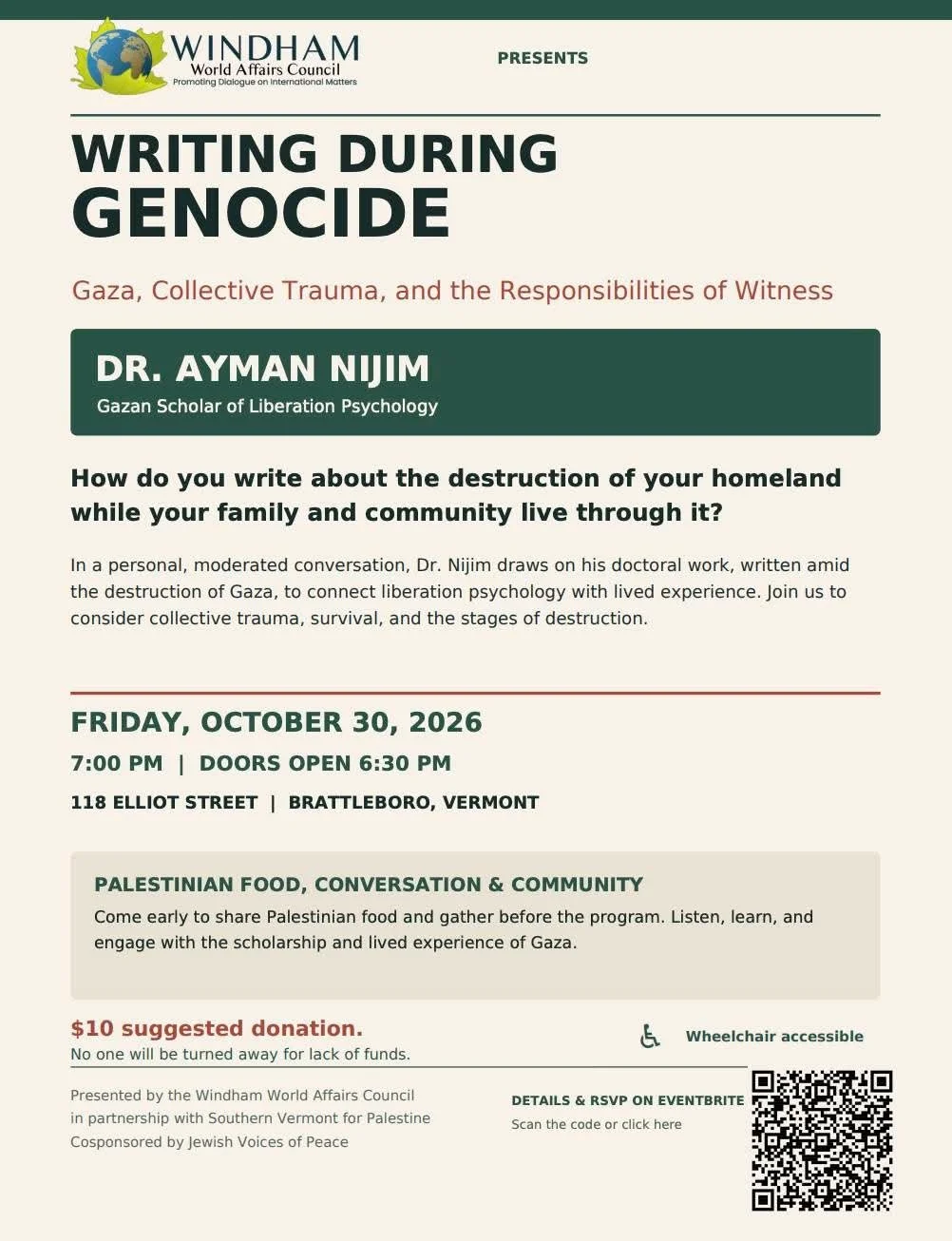
From Gaza to Vermont: Although Gaza is thousands of miles from Vermont, the questions at the heart of Dr. Nijim’s talk are not distant ones. How do communities respond to violence and displacement? How is trauma carried across borders and generations? What does it mean to witness suffering from afar—and what responsibilities come with knowing what is happening?
These questions have particular resonance in Brattleboro and across Vermont, where local communities have a long tradition of engaging with international affairs, human rights, peace and justice, and the experiences of people displaced by conflict. Southern Vermont has welcomed refugees and asylum seekers from around the world, while residents have gathered for vigils, public conversations, educational programs, and humanitarian efforts responding to events far beyond our state.
Dr. Nijim’s visit offers an opportunity to bring those global and local threads together. By hearing directly from a Gazan scholar whose academic work and personal life have become inseparable, we can move beyond headlines and geopolitical arguments to consider the human consequences of mass violence and the ways trauma, memory, displacement, and survival shape communities.
For the Windham World Affairs Council, this conversation also speaks to a fundamental purpose of engaging with world affairs locally: creating spaces where people can encounter perspectives they might not otherwise hear, ask difficult questions, and consider what informed